
Underpinning in Croydon
Underpinning in Croydon for subsiding homes
Describe the cracks or movement you have noticed and a specialist firm will review what is happening. There is no charge for this first look, so you find out where things stand before deciding anything.
Foundation repair methods
Underpinning options used around Croydon

- Mass concrete underpinning
- The specialist excavates short sections below the existing footing one at a time, fills each void with concrete, and lets it cure before moving to the next bay.
- Beam and base underpinning
- A reinforced concrete beam is cast below the wall, transferring the load onto new concrete bases set deeper into stable ground.
- Resin injection in Croydon
- Expanding resin is pumped through small holes into the soil beneath the footing. The specialist uses this to fill voids and compact loose ground without excavation.
- Screw piling in Croydon
- Steel piles are driven deep into the ground until they reach a load-bearing stratum, then brackets transfer the weight of the wall onto them.
Why a Croydon home might need underpinning
Underpinning becomes necessary when the soil beneath a foundation can no longer support the weight above it. In Croydon, London clay shrinks during dry spells and swells when wet, pulling the ground away from footings or pushing against them unevenly.
- 1
Diagonal cracks near corners
Cracks wider than 3mm that taper, often running from a window or door corner down toward the ground level.

- 2
Doors catching on frames
Internal doors that stick or will not latch, suggesting the frame has twisted as the wall behind it shifts.
- 3
Gaps at skirting boards
A visible space opening between the bottom of the skirting and the floor, indicating the wall has dropped slightly.
- 4
Cracks where extensions join
A vertical split appearing along the line where an extension meets the original house wall, showing differential movement.
What you do and what the specialist does
The heavy work falls entirely to the specialist firm. Your part is limited to giving access, sharing information about the building, and staying out of the excavation zones while the work proceeds.
The specialist's work
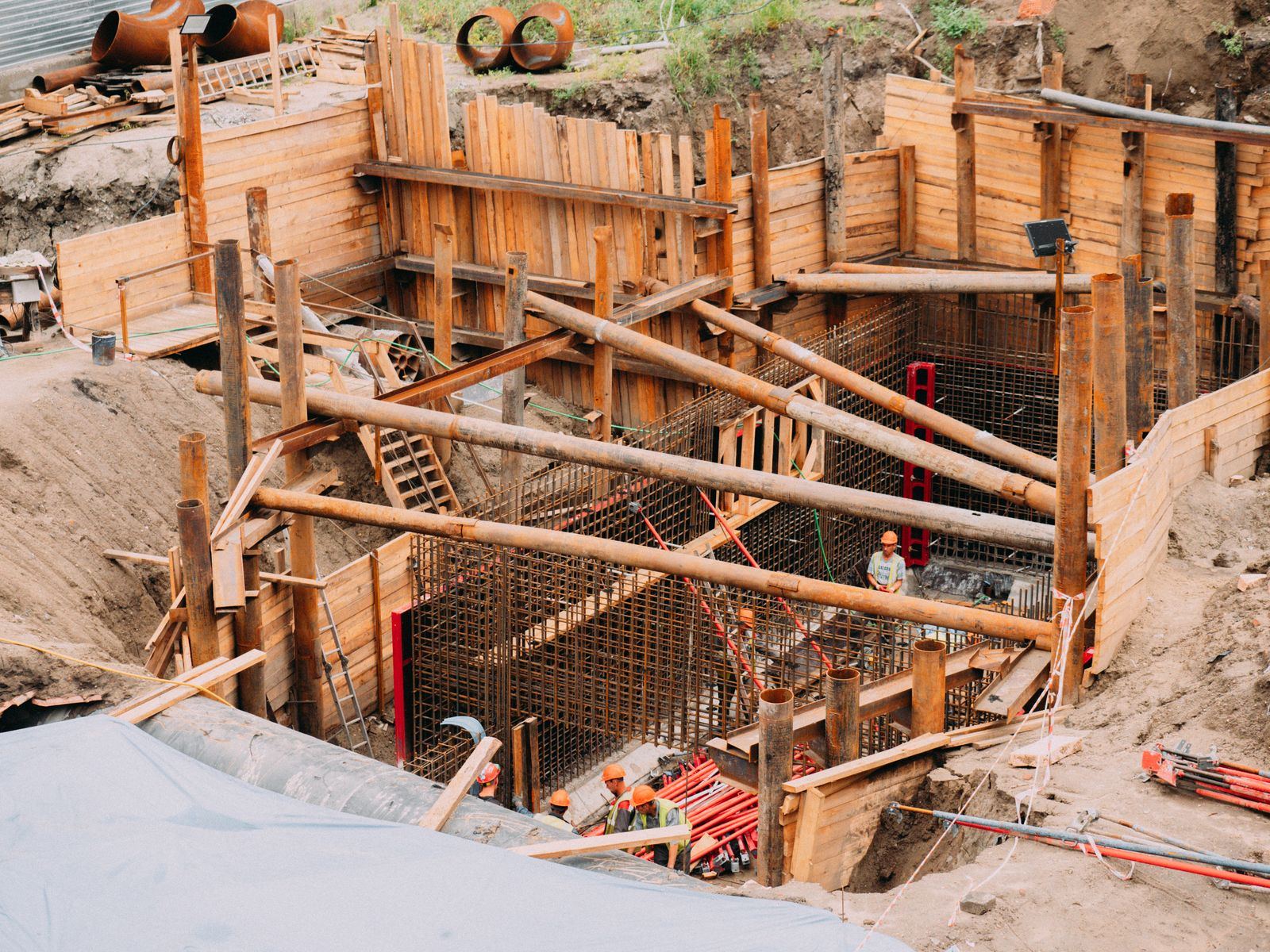
- Excavate the first short section directly below the existing footing
- Pour mass concrete into the void and leave it to cure fully
- Move to the next bay only once the previous section has set hard
- Repeat the sequence along the affected wall until all bays are filled
- Backfill around the new concrete and make good the disturbed ground
- Monitor levels to confirm the foundation has stabilised
Your part
- Provide access to the inside and outside walls being worked on
- Share any history of drains, trees or previous repairs near the house
- Keep children and pets away from the open excavation bays
Checks before underpinning begins
A specialist establishes the cause of movement before specifying any repair. Fixing a symptom while the underlying problem remains active means the ground will continue to shift regardless of the concrete poured beneath it.
-
Drainage CCTV survey
Cameras are sent through the underground pipes to look for fractures or blockages. A leaking drain washes soil away, so repairing the pipe must happen before any foundation work starts.
-
Soil investigation
Trial pits or boreholes reveal what type of ground sits beneath the house. London clay behaves differently from chalk or gravel, and the depth to stable strata determines how deep the new footings must go.
-
Tree root mapping
Roots from nearby trees extract moisture from clay soils. The specialist locates significant roots to establish whether vegetation management is needed alongside or instead of structural repair.
-
Level monitoring
Precise measurements taken over weeks or months show whether the movement is ongoing or has already stopped. This data tells the specialist if underpinning is actually required.
-
Structural assessment
An engineer reviews the crack patterns and wall distortions to calculate loads. This determines whether mass concrete or beam and base underpinning suits the specific wall construction.
If these checks point to different causes, the specialist resolves the contradiction before any excavation begins.
Working out how soon to act
Figuring out exactly what is wrong requires a site inspection. What matters right now is how quickly you should ask for one. Some signs demand immediate attention, while others allow time to observe whether the movement continues across seasons.
-
A crack has opened more than 5mm wide in the last few weeksToday
Rapid widening suggests active ground failure or a sudden loss of support beneath the footing, possibly from a burst water main or collapsed drain.
What to do Ask a specialist to inspect the wall and the drains immediately.
-
Doors and windows jamming worse each month since summerSoon
Progressive sticking usually points to seasonal clay shrinkage that has not recovered, meaning the ground is still drier than normal at depth.
What to do Request a survey before winter masks the pattern.
-
Hairline cracks reappearing after being filled previouslyWorth watching
Repeated fine cracking can indicate minor thermal movement or very slow settlement that may not require structural intervention yet.
What to do Mark the ends with a pencil and check monthly for growth.
-
A gap opening between a bay window and the main wallSoon
Bay windows often have shallower foundations than the main house, making them vulnerable to differential movement when soil conditions change.
What to do Ask the structural engineer to confirm whether underpinning is actually needed before any ground is broken beneath your home.
-
Floor sloping noticeably toward one external wallToday
A visible slope across a room suggests one side of the foundation has dropped significantly, altering the load distribution across the floor joists.
What to do Arrange an urgent structural assessment of the affected area.
Nothing here diagnoses a specific home. If a crack opens suddenly or widens noticeably within days, ask a specialist to look at it immediately rather than waiting.
Ask about underpinning for your home
Send details of what you have noticed and a specialist firm will review the situation. This does not commit you to any work or cost. You simply find out whether underpinning is necessary and what happens next.
- No obligation to proceed
- Free initial assessment
- Specialist handles the work