For Croydon landlords
Subsidence in rented property: a landlord's guide
Find out what subsidence in a rented home means for your obligations, your tenants and your insurance. Describe the problem and receive guidance from a specialist firm at no cost to you.
Your duty when a tenant reports cracks
When a tenant in Croydon reports cracks, the law places the responsibility for structural repair on the landlord. A tenant reported cracks landlord duty starts the moment you are told. You must arrange an inspection to find out whether the movement is superficial or structural. Ignoring it risks making the damage worse and leaves you open to complaints through the council.
The first step is to have a specialist firm assess the building. They will look at where the cracking sits, how wide it is, and whether doors and windows still close properly. From there they can advise if monitoring equipment needs fitting or if immediate repair is necessary. Read more about [what different cracks mean](/is-it-subsidence/reading-cracks-in-your-walls) before the visit so you know what questions to ask.
Keep every communication in writing. A dated email or letter showing you acted promptly protects you if the tenant later raises a formal complaint. The specialist firm will produce their own report, but your records of the initial report matter just as much.
Getting access when a tenant refuses appointments
Securing access for structural works tenancy agreements allow can be difficult if a tenant is uncooperative. Most assured shorthold tenancies include a clause letting the landlord enter for essential repairs, provided reasonable written notice is given. Twenty-four hours is standard, though arranging a time that suits both sides avoids arguments at the door.
If a tenant refuses all appointments, you cannot force entry without a court order. Explain clearly that the work protects their safety and that delaying it may make the property harder to live in. A specialist firm handling the investigation can sometimes help by offering flexible appointment times outside working hours.
For HMO properties in Croydon, the rules are stricter. The management regulations require you to maintain the structure, and a tenant blocking access does not remove that obligation. Document every attempt to arrange a visit. If you eventually need to apply for an injunction, those records show the court you tried every reasonable step first. Find out more about [arranging a subsidence survey](/subsidence-help) so the process moves quickly once access is granted.
Rehousing tenants during underpinning
Whether you have to decant tenants during underpinning depends on the scale of the work. If a specialist firm needs to excavate beneath the foundations across the whole building, the noise, dust and loss of floor stability usually make the rooms unsafe to occupy. Smaller interventions, like resin injection or screw piling, often allow people to stay in parts of the house while work happens elsewhere.
The specialist firm carrying out the repair will state clearly whether the property needs to be empty. Their method statement forms part of the evidence your insurer will want to see. If temporary rehousing is required, the cost typically falls under the alternative accommodation section of your buildings policy.
Plan ahead. Finding short-term lets in Croydon takes time, and your existing tenants still hold a legal right to return once the building is safe. Agree the expected duration with the contractor before anyone moves out, so you can give accurate dates. See how [underpinning methods differ](/underpinning) and why some cause less disruption than others.
Insurance cover for ground movement and lost rent
Most standard landlord insurance policies include cover for landlord insurance ground movement claims, but the wording varies. Check whether your policy lists subsidence, heave and landslip explicitly. Some cheaper policies exclude them entirely or impose a higher excess, often around one thousand pounds.
A loss of rent subsidence claim is handled separately from the repair costs. If the building becomes uninhabitable, your insurer should pay the rent you would otherwise have collected, up to a stated limit or period. This applies only if the tenant is forced out because of the insured event, not because you chose to carry out voluntary improvements at the same time.
Notify your insurer as soon as you suspect movement. Delaying can give them grounds to reduce the payout. They will appoint a loss adjuster who coordinates with the specialist firms doing the investigation and repair. Keep copies of every form submitted. Understanding [how insurers handle these claims](/is-it-subsidence/claiming-on-buildings-insurance) helps you push back if the process stalls.
Responsibility for damaged belongings and redecoration
Your buildings insurance covers the structure. The tenant's contents insurance covers their furniture, electronics and personal items. If ground movement cracks a wall and ruins a tenant's wallpaper, the building policy pays to replaster and repaint, but the tenant claims for the ruined wallpaper itself under their own contents cover.
Disputes happen when neither side has adequate insurance. Make sure your tenancy agreement states clearly that tenants must hold contents insurance. If a specialist firm causes accidental damage while working, their public liability insurance should respond, but this only covers negligence during the repair, not the original subsidence event.
Redecoration after structural repair is usually included in the buildings claim. The insurer expects the finish to match the standard that existed before the damage. If the tenant had already decorated to a high specification, they may need to prove the cost to recover the difference. Photographs taken at the start of the tenancy help settle these arguments quickly.
HMO licences and re-letting after structural repair
Croydon Council requires certain HMOs to hold a licence, and that licence depends on the property meeting structural and safety standards. If hmo structural repairs croydon authorities consider significant are underway, you must inform the licensing team. Failing to do so can invalidate the licence and result in a civil penalty.
During major works, the council may impose conditions or temporarily suspend the licence if the building is not safe for multiple occupants. Once the specialist firm completes the repair and provides certification, you apply to have the licence reinstated or varied. Keep the completion certificate safe; future buyers and lenders will ask for it.
Re-letting a property after subsidence repair requires honesty. Prospective tenants may notice fresh plaster or new decoration. If the underlying issue has been resolved and monitored, say so. If monitoring is ongoing, explain what that involves. Concealing structural history makes it harder to defend yourself if a new tenant complains. Learn how [London clay affects local homes](/is-it-subsidence/london-clay-under-croydon-houses) since many Croydon HMOs sit on shrinkable soil.
Records to keep throughout the process
Start a dedicated file the day a tenant mentions a crack. Include the date, which room, a description of the mark and any photographs the tenant sends. When you instruct a specialist firm, add their quote, method statement and every visit report to the same folder.
Monitoring data matters. If tell-tales or crack gauges are fitted, record the readings each time they are checked. A pattern of widening over several months carries far more weight with insurers and surveyors than a single photograph taken in panic.
Keep correspondence with tenants, the council and your insurer together. If you change managing agents mid-process, hand over the complete file. Gaps in documentation are the main reason claims get delayed or reduced. Digital copies stored in two separate locations prevent loss. For context on what might be causing the movement, read about [leaking drains washing out ground](/is-it-subsidence/leaking-drains-washing-out-ground) beneath older Croydon terraces.
Disclosing movement to new tenants and future buyers
You must disclose known structural issues to prospective buyers. The Law Society Property Information Form asks directly about subsidence, underpinning and insurance claims. Answering falsely gives the buyer grounds to sue for misrepresentation after completion.
For new tenants, the legal position is slightly different. There is no statutory requirement to volunteer historical subsidence information if the repair is complete and the building is safe. But if a tenant asks, or if monitoring equipment is still visible, you must answer honestly. Misleading a tenant about safety breaches your repairing obligations.
Properties in areas like Thornton Heath, South Norwood and Addiscombe frequently experience movement because of the clay soil and mature trees. Buyers familiar with Croydon expect to see paperwork proving the issue was dealt with professionally. Having a full file from the specialist firm makes the sale smoother and prevents last-minute price reductions. Understand the difference between [subsidence and settlement](/is-it-subsidence/subsidence-or-settlement) so you describe the history accurately.
What subsidence looks like in a rented home
Ground movement shows itself gradually. Tenants notice changes inside rooms before the exterior tells the full story. These signs do not confirm subsidence, but they mean a specialist firm should investigate further.
- 1
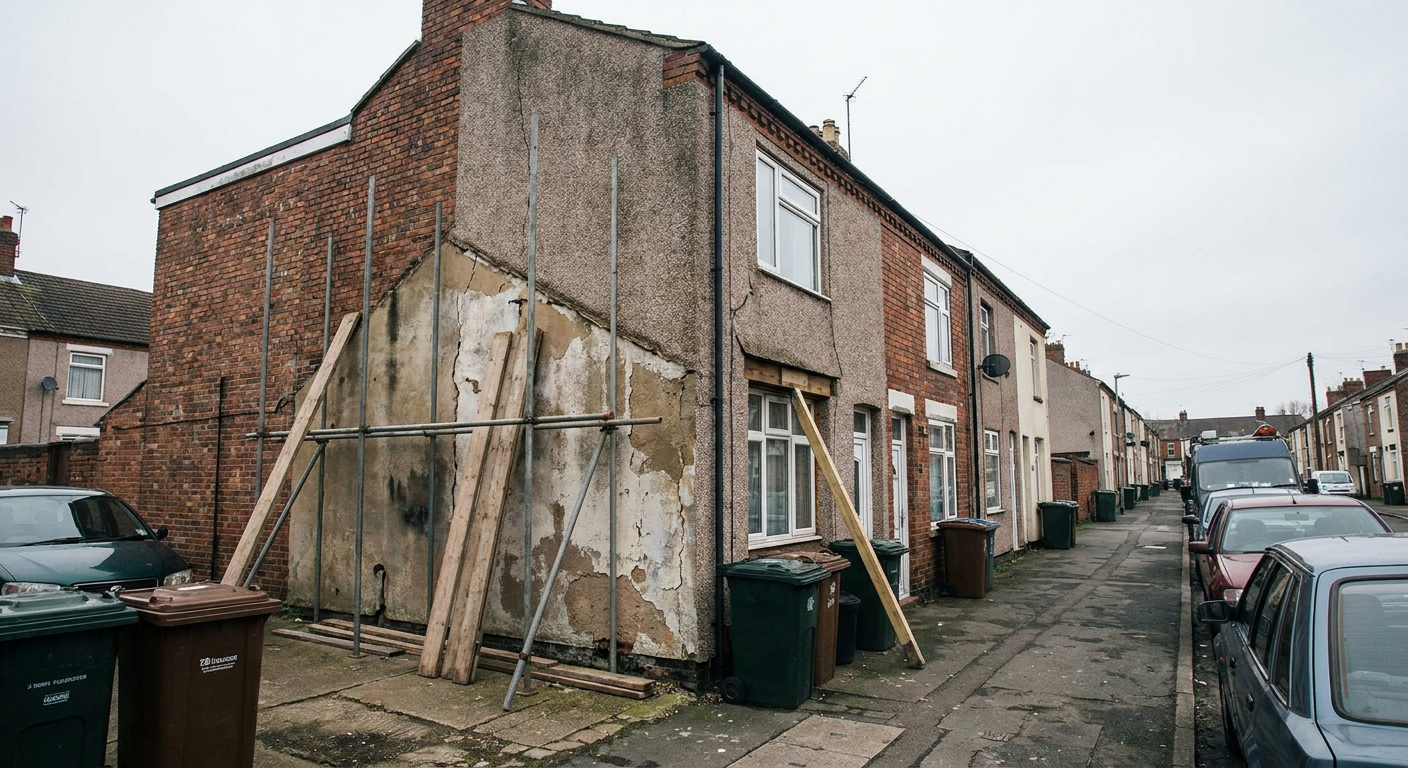
Diagonal cracks near openings
Cracks wider at the top than the bottom, often running from window corners toward the ceiling. They suggest uneven foundation movement.
- 2
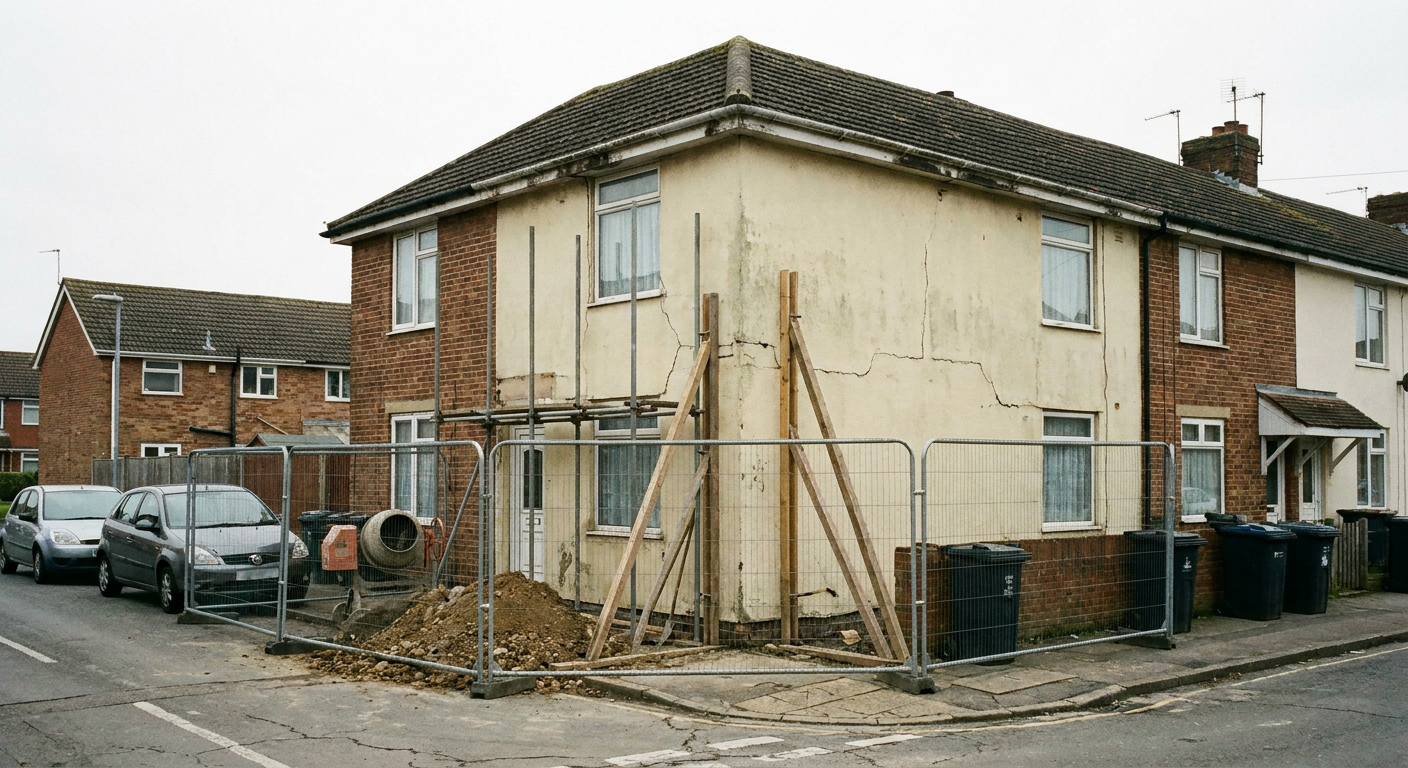
Doors catching on frames
Internal doors that suddenly stick or fail to latch. The frame may have distorted as the wall shifted out of square.
- 3
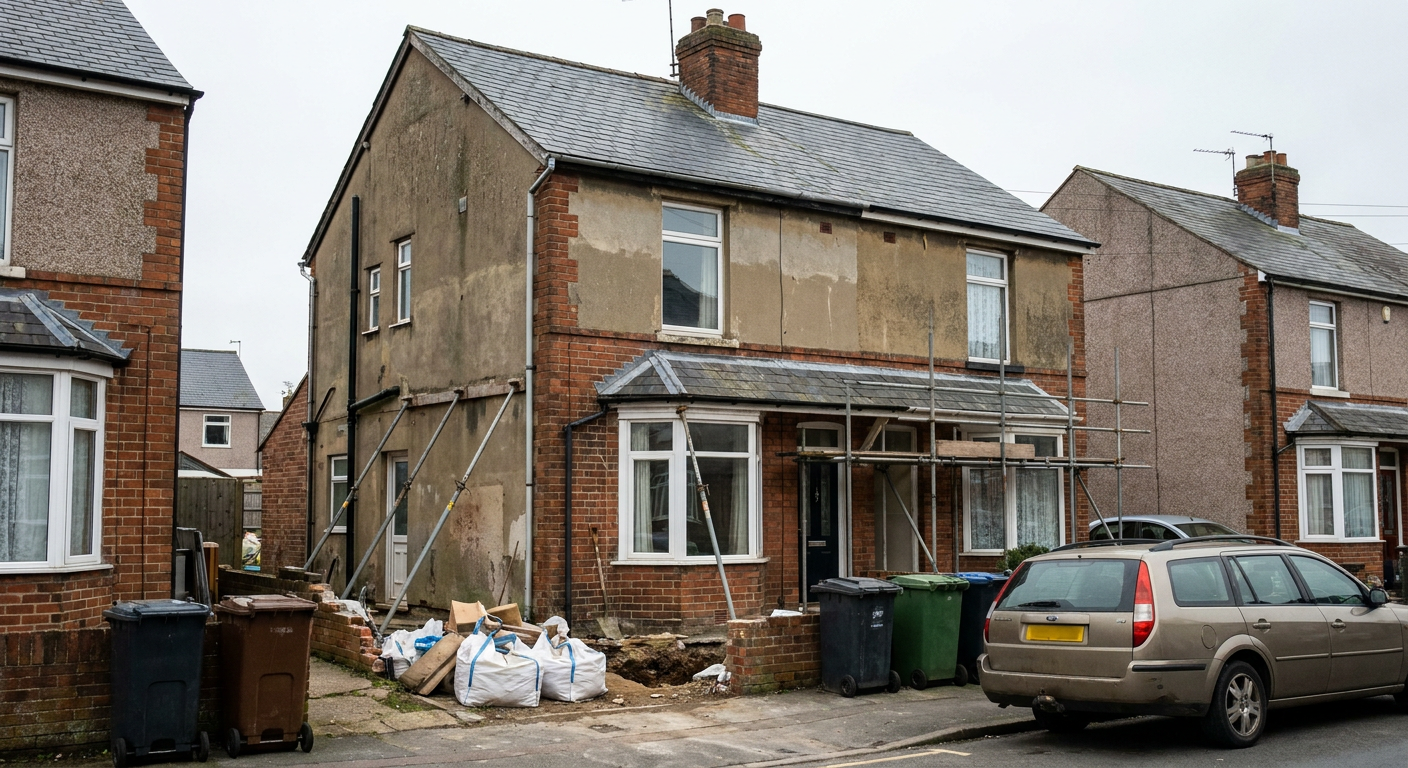
Gaps around skirting boards
Skirting pulling away from the wall or floor, leaving a visible gap. This happens when the floor drops or the wall leans.
- 4
Sloping floors in hallways
A ball rolls consistently in one direction, or furniture no longer sits level. Floor joists may be dropping at one end.

- 5
External brickwork stepping
Mortar joints cracking in a staircase pattern along the outside wall. Visible from the street, often noticed by neighbours first.
Specialist repair methods
How the work gets done in Croydon
- Underpinning
- Excavating below the existing foundations and pouring new concrete to reach stable ground. Used when movement is severe and ongoing.
- Resin injection
- Pumping expanding geopolymer resin into voids beneath the slab. It compacts loose soil and lifts settled floors without major excavation.
- Screw piling
- Driving steel helical piles deep into load-bearing strata. Suitable for restricted sites and heavier structures where traditional underpinning is impractical.
- Concrete floor repair
- Stabilising and replacing cracked concrete slabs that have split due to differential movement or poor original construction.
- Drain CCTV surveys
- Running cameras through underground pipes to find leaks that wash soil away from foundations, a frequent cause of subsidence in Croydon.

Tell us what you have noticed at your rental
Send details of the cracks or movement. A specialist firm will review the information and advise on next steps. This enquiry does not commit you to any repair work or contract.
- No obligation to proceed
- Free initial assessment
- Specialist advice direct