
Buying and selling
Buying a house with cracks in the walls
Send the details of the home you are buying or selling. A specialist firm will review what your surveyor flagged and explain your options before exchange, without charging you for that first look.
Talk to someone about your sale Read the guidance below first
When a survey finds movement before exchange
A standard homebuyer survey is not designed to diagnose ground movement. If the surveyor noticed cracks wider than a few millimetres, doors sticking in frames, or gaps opening where an extension meets the main house, they will usually recommend further investigation before you commit to the purchase.
This is where buying a house with cracks becomes complicated. The estate agent might describe the damage as old settlement, but a mortgage lender needs more certainty than that. In Croydon, where London clay sits beneath much of the borough from Thornton Heath down to Sanderstead, seasonal shrinkage can open and close fissures year after year without causing lasting harm. But it can also signal something worse.
The next step is a structural engineer report for the house purchase. That professional visits the property, measures the cracks, checks the drainage and soil conditions, and writes up their findings. You will want to know how long this takes before exchange. From instruction to receiving the written document, allow two to four weeks. Some engineers work faster, but rushing rarely helps when a lender is involved.
Cost and who should instruct the engineer
The person buying the home usually pays for the structural engineer report, because they are the one who needs to satisfy their lender. For a Victorian terrace in Croydon, expect to pay somewhere between six hundred and twelve hundred pounds, depending on the size of the house and how many issues the engineer needs to address.
If you are the seller and your sale has stalled because the buyer's surveyor saw cracks, you can commission your own report to keep things moving. Having a clear, recent document ready to hand over stops the transaction from collapsing while everyone waits for answers. Sellers in Addiscombe or South Norwood sometimes find this approach prevents a chain from breaking entirely.
The engineer works independently. They do not sell repairs. Their job is to tell both parties whether the movement is historic and stable, or active and ongoing. That distinction determines everything that follows, from the mortgage offer to the insurance policy.
Mortgage lenders and historic subsidence
Lenders react differently to ground movement. A mortgage declined because of cracks is not inevitable, but it happens when the paperwork leaves questions unanswered. Most high street banks will lend on a previously underpinned house if a certificate of structural adequacy exists and the work was completed several years ago.
Historic movement means the problem was identified and resolved. Active movement means the ground is still shifting. Lenders draw a hard line between the two. If the engineer confirms the house is stable, the valuer can proceed and the loan offer typically follows.
If the report mentions ongoing issues, the lender may hold back funds until repairs are finished, or withdraw the offer completely. Buyers sometimes ask whether they should renegotiate the price or walk away if active movement is found. That depends on the scale of the problem and the cost of the fix. A specialist contractor can quote for underpinning, resin injection, or screw piling, which gives you figures to take back to the negotiating table.
Insuring a previously underpinned house
People often wonder whether they should buy an underpinned house at all. The answer usually comes down to insurance. Buildings cover is available for homes with past subsidence claims, but fewer insurers compete for that business, so premiums tend to be higher.
The current insurer may continue cover if the policy transfers, though they are not obliged to. When shopping for new quotes, disclose everything. Hiding a past claim or previous underpinning voids the policy when you need it most.
A certificate of structural adequacy does not automatically transfer its protection to a new owner, but it proves the work met building regulations. Keep the original paperwork safe. Insurers want to see who did the work, when it was done, and whether monitoring confirmed the movement stopped. Without those documents, securing cover becomes significantly harder and more expensive.
Questions to ask the current owner
Before exchange, ask the seller directly about past claims and repairs. Start with whether they have ever claimed on their buildings insurance for subsidence. If they have, request the claim reference and the outcome.
Ask whether any underpinning or foundation repair took place, and who carried it out. Find out if crack monitors were installed and what the readings showed over time. Request copies of any structural reports, building control completion certificates, or guarantees for remedial work.
Also ask about the drains. Leaking pipes wash soil away from foundations, and a drain CCTV survey often reveals problems invisible from the surface. Tree roots cause similar issues across Croydon, particularly near older properties in Norbury and Purley. Knowing which trees were removed or pruned, and when, helps the engineer build a complete picture of why the ground moved.
Signs a surveyor flags during a house purchase
Cracks alone do not prove subsidence. Surveyors look for patterns that suggest the ground beneath a home has shifted, rather than simple plaster drying out or timber shrinking with age.
- 1
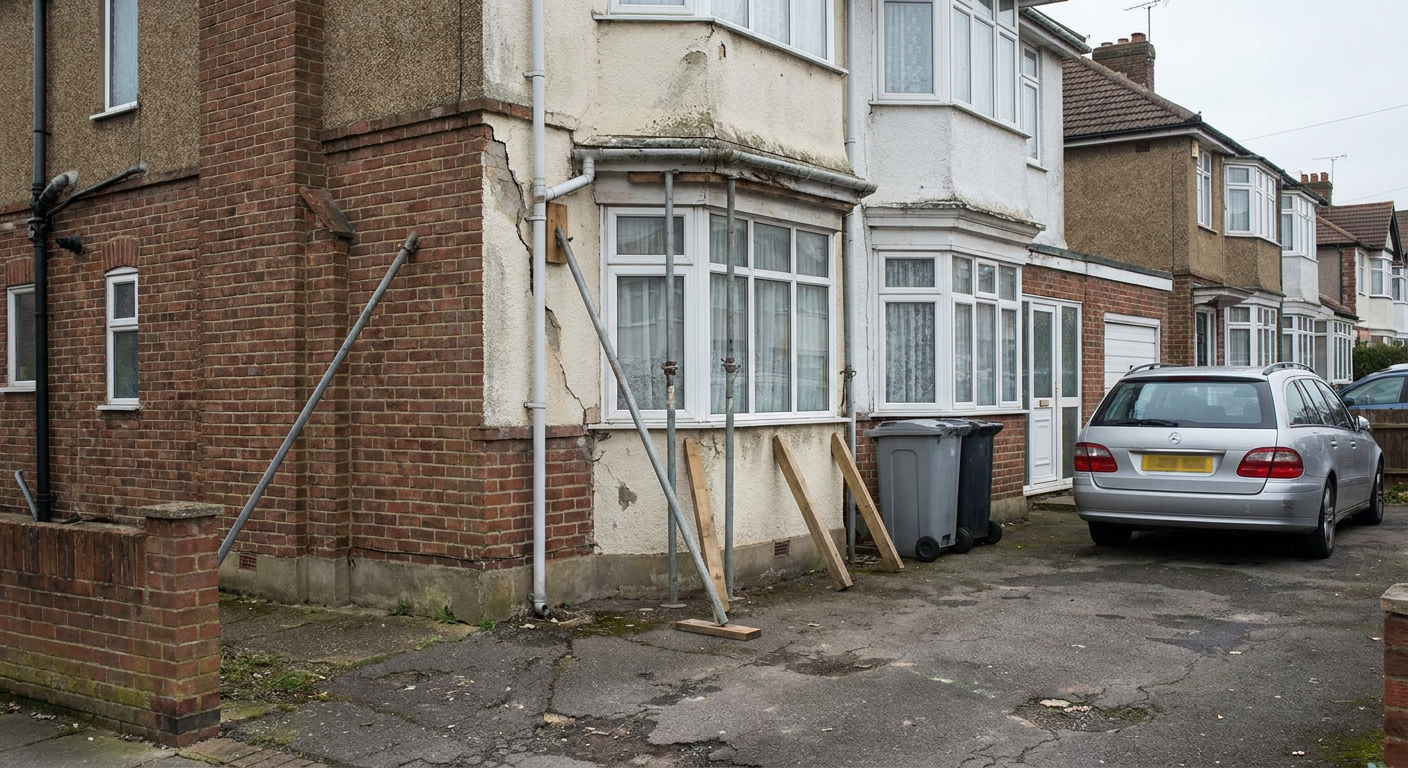
Diagonal cracks near openings
Fissures running at an angle from window or door corners often widen at the top. This pattern suggests one side of the wall has dropped relative to the other.
- 2
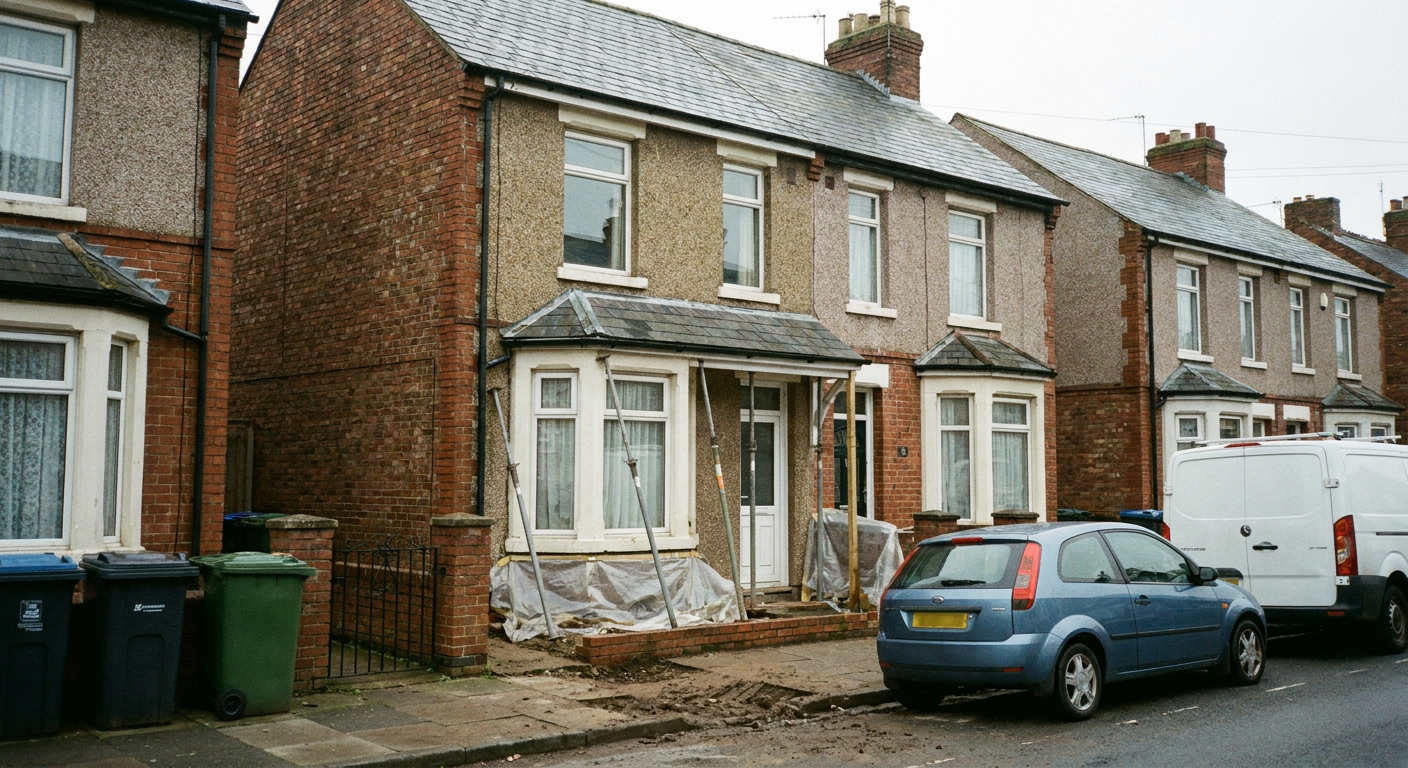
Doors and windows jamming
Frames distort when walls move. A door that suddenly sticks or a window that no longer closes flush can indicate shifting foundations nearby.
- 3
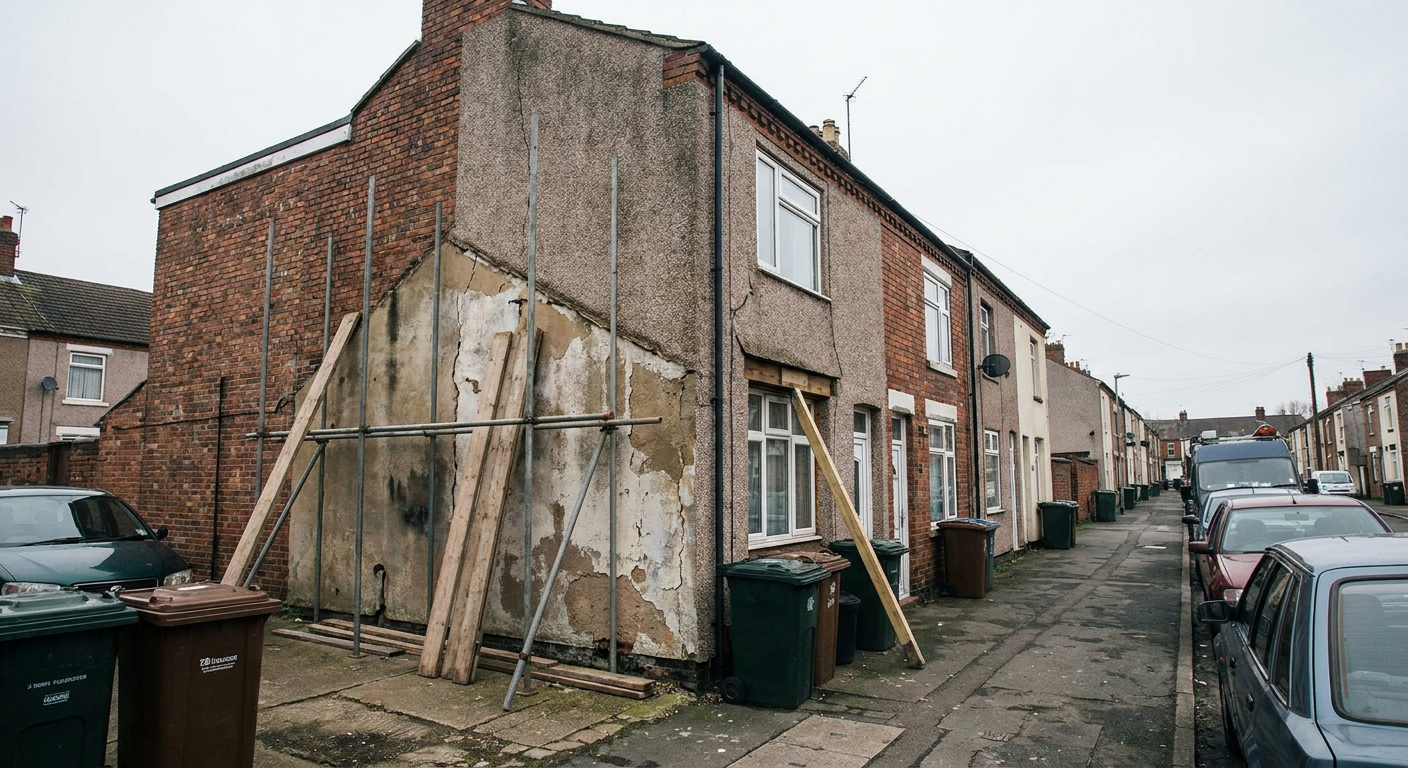
Gaps at extension joints
Where an extension or bay window joins the main house, a widening gap shows the two structures are moving apart at different rates.
- 4
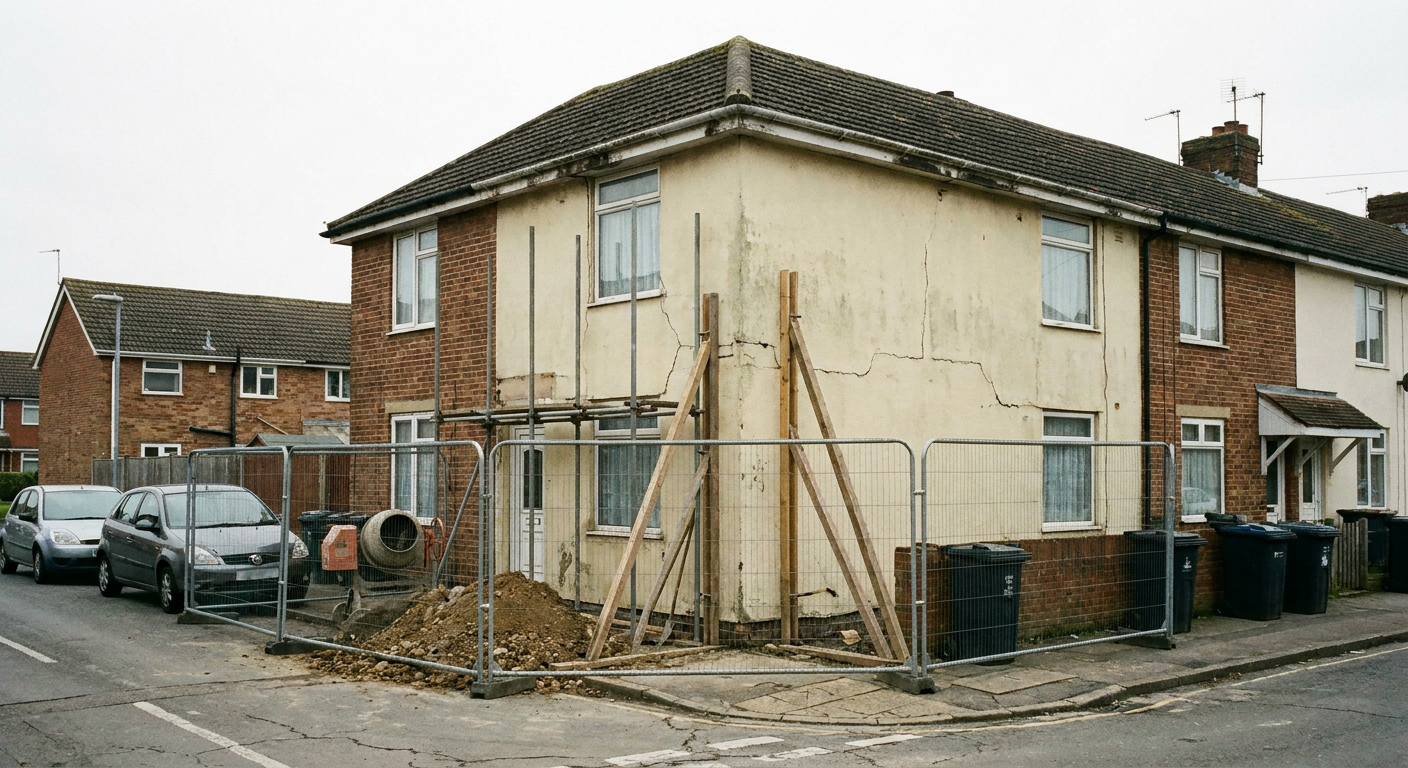
Sloping floors
A visible slope or a marble rolling consistently in one direction points to uneven settlement beneath the floor joists or concrete slab.
Repair methods
How specialists stabilise foundations in Croydon
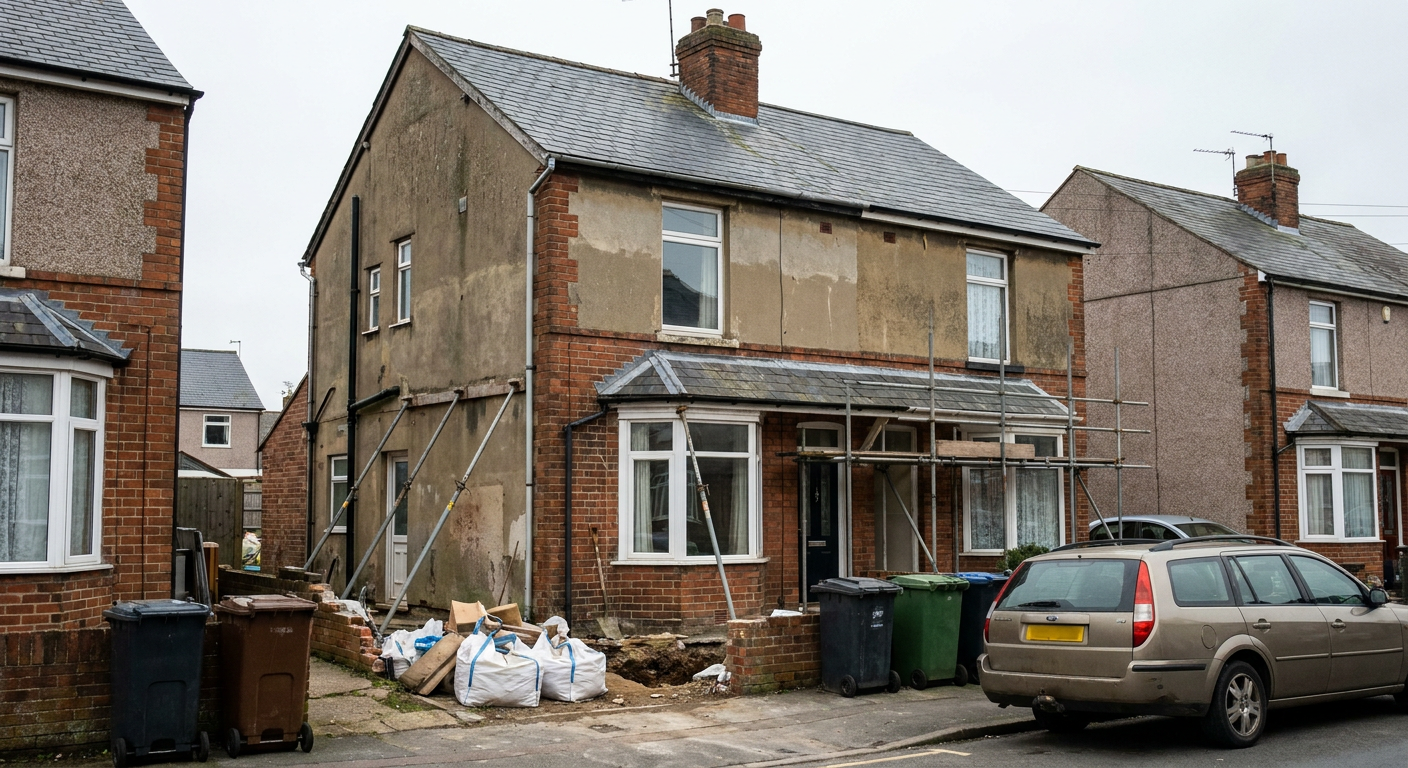
- Underpinning
- Excavating sections beneath existing foundations and pouring new concrete to reach stable ground. Used when shallow soil cannot support the load.
- Resin injection
- Pumping expanding geopolymer resin into voids beneath a slab or footing. The resin fills gaps and compacts loose soil without major excavation.
- Screw piling
- Driving steel piles deep into load-bearing strata using hydraulic torque. Effective where traditional digging is restricted by access or tree roots.
- Drain CCTV survey
- Running a camera through underground pipes to locate fractures or blockages. Leaking drains frequently wash away the soil supporting a home.
- Concrete cracking repair
- Stitching or replacing damaged concrete floors and slabs once the underlying ground movement has been arrested and stabilised.
Tell us what your survey found
Send the details of the home and what the surveyor reported. A specialist firm will read the information and advise on the next steps. There is no fee for this initial review and no obligation to proceed.
- No obligation to proceed
- Free initial review
- Specialist advice