
Croydon drains
Leaking drain causing subsidence under your home
Describe what you have noticed around your Croydon home and a specialist firm will review the details. There is no charge for an initial conversation and no obligation to book any work.
When a leaking drain causes subsidence in Croydon homes
Old clay drains under Croydon terraces and semis
Many of the terraced and semi-detached houses across Croydon were built with clay-jointed drainage pipes running directly beneath them. Over decades, the joints between these sections fail. Water escapes into the surrounding soil every time a sink drains or a toilet flushes.
This constant flow washes out soil under foundations, leaving voids that the brickwork above cannot bridge. A cracked clay drain under house walls is one of the most frequent reasons homeowners in areas like South Norwood and Thornton Heath notice sudden movement. The problem often goes unseen until the damage appears on interior plaster or exterior brickwork.
Because these pipes are buried deep and run close to the footings, the escaping water targets the exact ground supporting the building. A broken drain foundation damage scenario rarely stabilises on its own. As long as water flows through the fracture, more material leaves the subsoil.
Soakaways and rainwater near the footings
Homes in Croydon frequently rely on soakaways to handle roof water. These are pits filled with rubble or crates, designed to let rainwater dissipate slowly into the ground. When a soakaway sits too close to the house, or when it collapses internally, it can become a source of trouble rather than a solution.
A failing soakaway causing ground movement does so by saturating the soil unevenly. London clay, which sits beneath much of the borough, swells when wet and shrinks when dry. If a soakaway dumps large volumes of water against one section of footing while the rest dries out, the differential movement cracks walls and distorts door frames.
You might notice the sinking patio near drain outlets after heavy rain. This happens because the water meant to disperse safely is instead pooling underground, softening the earth that holds up paved areas and shallow foundations alike.
Reading the signs inside and outside your home
Inside the house, cracks from drainage issues tend to follow specific patterns. They often appear low on walls, near skirting boards, or radiate from corners where internal walls meet external ones. Wallpaper tears along seams, and doors begin to catch on their frames because the opening has warped.
Outside, the signs of leaking drain garden areas include patches of grass that stay greener and soggier than the rest of the lawn, even in dry spells. You might see depressions forming along the line where the pipe runs. Paving slabs near the wall tilt away from their original level.
Distinguishing between tree root action and a plumbing failure requires observation. Trees cause seasonal movement: cracks open in late summer and close slightly in winter. Drainage failures produce continuous, progressive damage regardless of the season. A specialist surveyor looks at these timing clues alongside moisture readings to separate the two causes.
Why a camera survey comes before structural repair
If you suspect water is undermining your home, the logical first step is finding exactly where the pipe has failed. A CCTV drain survey involves a specialist pushing a small camera through the pipework to record its condition. They look for fractures, collapsed sections, root intrusions and displaced joints.
Without this footage, any structural repair is guesswork. Underpinning a wall while the drain still leaks simply means the new concrete sits in washing soil. The movement continues. Specialist firms insist on confirming the drainage network is sound before they design or install piling, resin injection or traditional mass concrete underpinning.
The sequence matters. First, locate the leak. Second, repair or reroute the pipe. Third, monitor the building to see if the movement stops once the water source is gone. Only then does a structural engineer decide whether the foundations need physical support or whether the house has settled back into place.
Is a leaking drain moving your home?
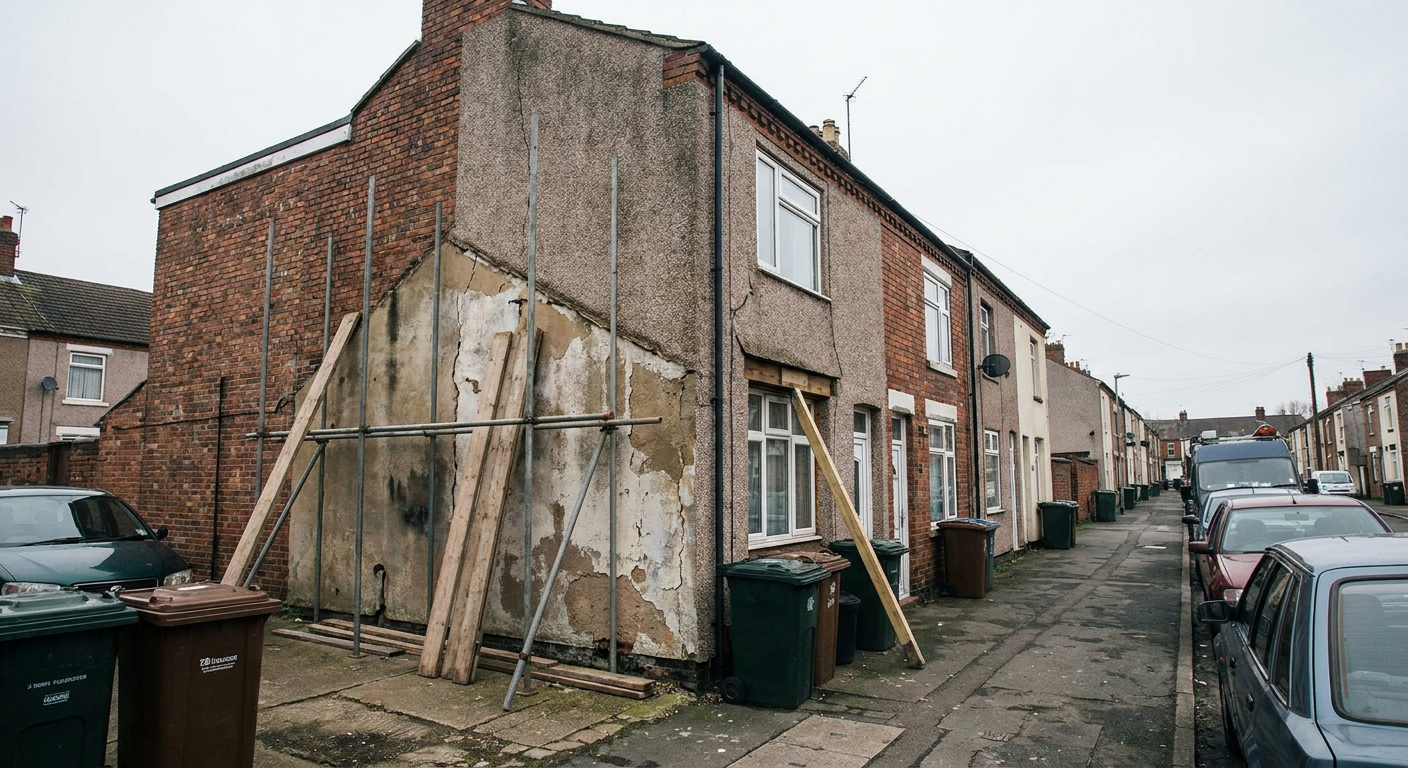
Water escaping from old pipes washes away the soil supporting your foundations. The ground drops, the brickwork follows, and cracks appear. Here is what that looks like around a Croydon home.
- 1
Low cracks near the floor
Fissures appearing just above the skirting board suggest the footing below has dropped, pulling the wall down with it.

- 2
Soggy patches in the garden
Ground that stays wet and spongy near the house wall often indicates water escaping from a buried pipe joint.
- 3
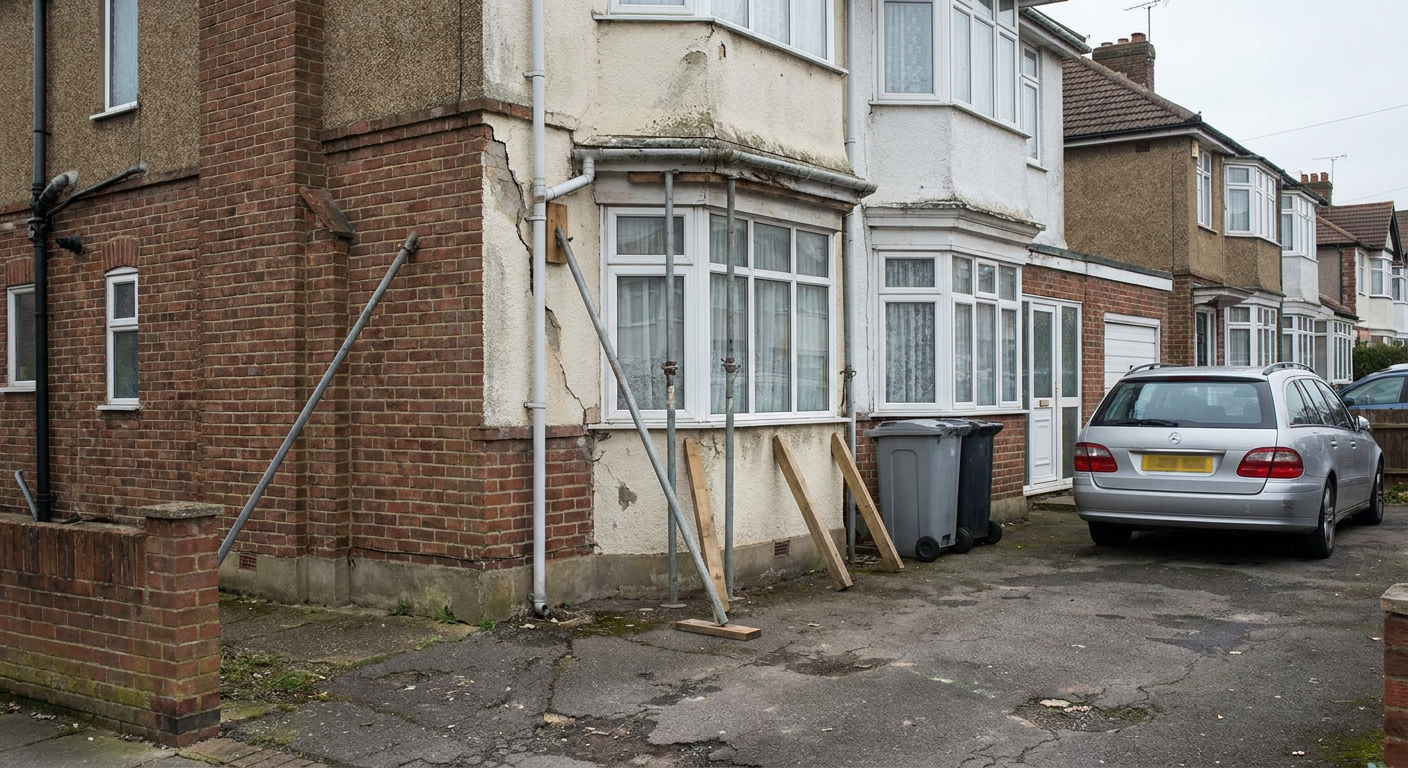
Tilted paving slabs
Patio stones sinking towards the house or dropping suddenly along a line point to soil being washed out underneath.
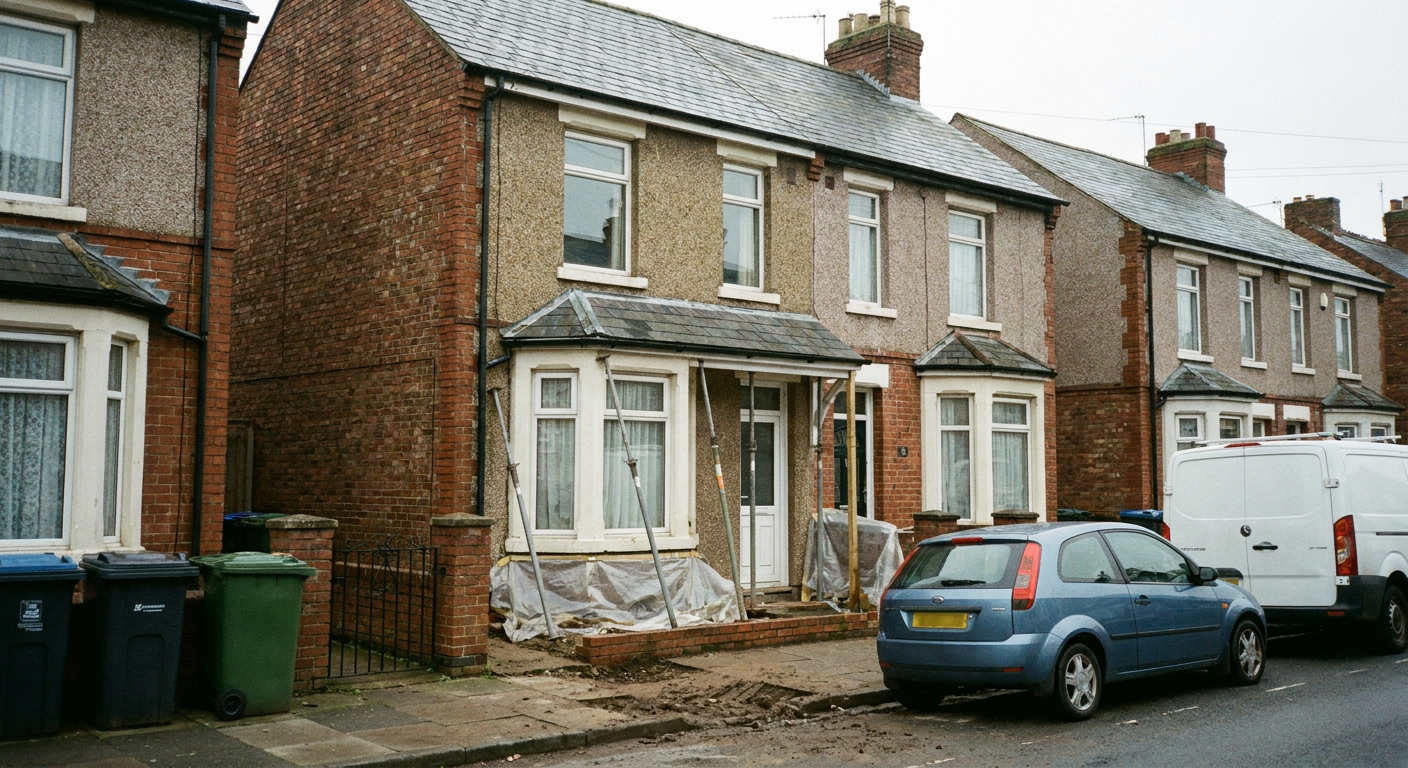
- 4
Doors catching on frames
A door that sticks or will not latch properly means the frame has distorted because the wall around it has shifted.
Questions about leaking drains and subsidence
Homeowners in Croydon dealing with ground movement ask these things when they suspect a pipe is responsible.
- Drain or tree behind the cracks?
- Trees cause seasonal cracking that opens in summer and closes in winter. Drain leaks cause continuous movement all year round.
- Signs outside the house?
- Look for permanently wet soil, sinking patios near pipe runs, and unexpected lush grass growing along the drain path.
- Can a soakaway undermine footings?
- Yes. If it fails or sits too close, concentrated rainwater saturates the clay and washes out soil under foundations.
- Does fixing the pipe stop movement?
- Stopping the leak removes the cause. The house may settle naturally, but sometimes structural repairs are still needed.
- Will buildings insurance pay?
- Most policies cover sudden subsidence from drain leaks. Insurers require specialist reports before approving any claim.
- What order should things happen?
- A camera survey always comes first. Repairing the pipe must happen before any structural work begins.
Tell us what you have noticed at home
Leave your details and describe the cracks or damp smells. A specialist firm will review the information and advise on next steps. Sending an enquiry costs nothing and commits you to no work.
- No obligation to proceed
- Free initial review
- Local specialists only